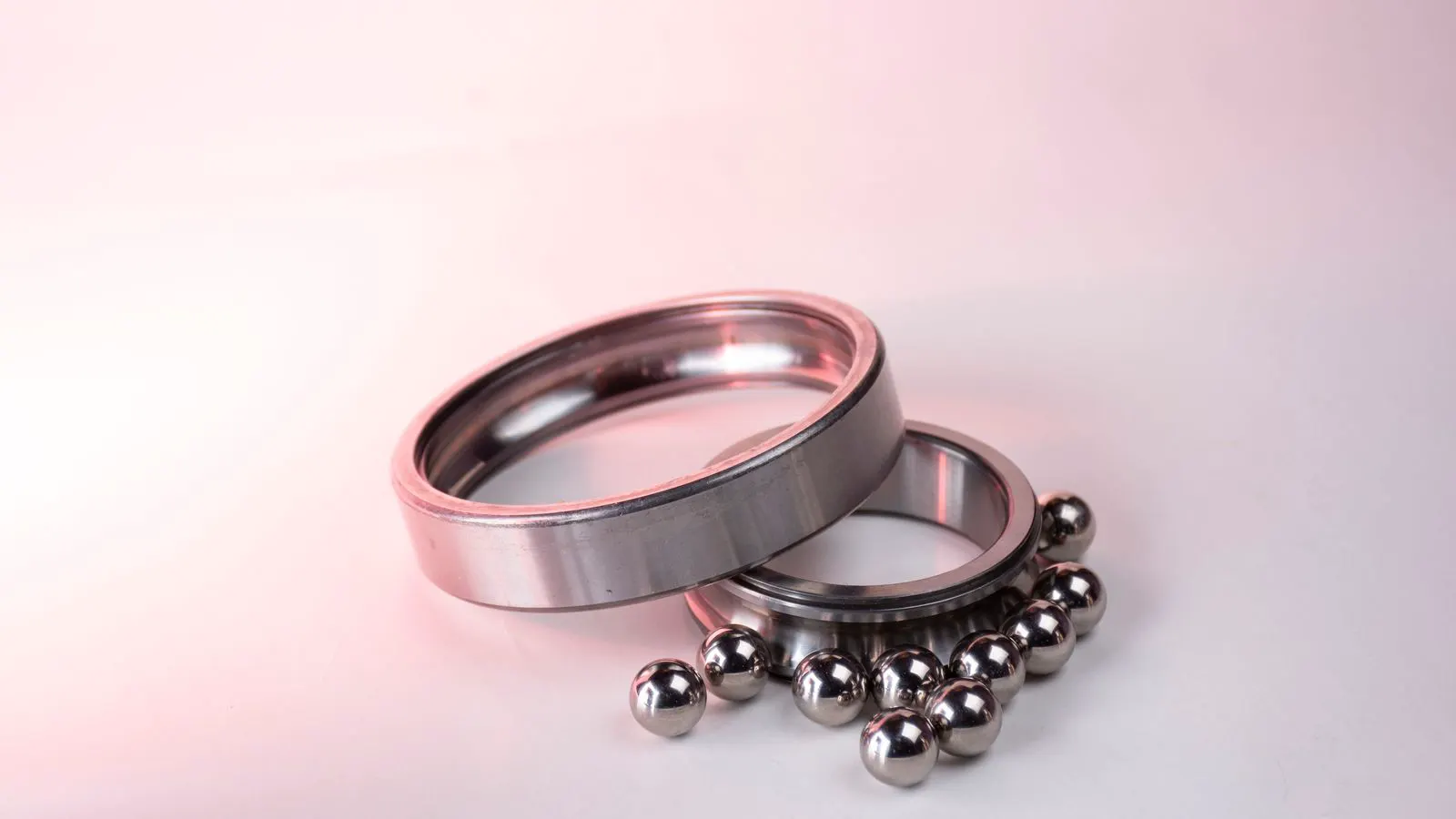
Selecting high torque bearings requires matching load ratings, materials, and certifications to specific application demands. This guide outlines the criteria engineers use for industrial sourcing, ensuring the chosen parts withstand rotational stress without premature failure.
- Match the bearing's dynamic load rating to the worst-case torque and shock loads in the application.
- Verify material specifications and heat treatment processes to ensure surface hardness and core strength.
- Request test reports and dimensional inspection certificates to confirm the parts meet drawing requirements.
- Evaluate supplier quality management systems to reduce the risk of receiving nonconforming stock.
- Account for thermal management and lubrication when specifying bearings for continuous high-torque duty.
High torque bearings fail when the selection process ignores the interaction between load, speed, and heat. A bearing that fits the housing bore may still fail if the material cannot handle the contact stress, or if the lubrication system cannot dissipate the generated heat. The sourcing decision is rarely about the lowest price per unit. It is about verifying that the part will survive the specific mechanical environment it will occupy.
What defines high torque bearing requirements
High torque applications do not just apply steady radial or axial force. They introduce shock loads, variable speeds, and frequent direction changes. Consider a wind turbine gearbox where the drivetrain experiences intermittent wind gusts, a mining crusher drive where material jams create sudden stoppage forces, or a heavy duty extrusion press that cycles between compression and release. The bearing sees torque spikes that can exceed the average load by a significant factor. These transients are often missed when engineers rely solely on continuous load data.
When defining requirements, start with the actual torque values, not nominal motor ratings. The motor nameplate often shows rated output, but the drivetrain may see transient peaks during startup, clutch engagement, or load rejection. Engineers typically apply a load factor to account for these spikes. For example, a press that applies a constant 50 kilonewtons of force might experience a 20 percent surge during the final stage of the stroke. Ignoring this surge means the bearing is designed for a condition that exists only in the datasheet, not on the factory floor.
The housing geometry also constrains the choice. Bore size, outer diameter, and width limits determine which bearing families are physically possible. A high torque application often requires a wider bearing to increase the contact area, which reduces the Hertzian stress on the raceways. Wider bearings distribute the load over a larger zone, lowering the peak stress at the contact point. However, width increases the overall envelope, which may require redesigning the shaft or housing. Engineers must balance the stress relief gained from width against the space constraints of the existing assembly.
How to evaluate dynamic load ratings
The dynamic load rating, often denoted as C or C0 for static, is the first technical filter. It represents the load a bearing can carry for a standard life duration, typically one million revolutions. This is a baseline, not a guarantee of infinite life. The rating assumes ideal conditions: optimized lubrication, correct temperature, and no external vibration. In reality, every application deviates from these ideal assumptions.
For high torque bearings, static load rating matters just as much. If the application involves holding position, starting and stopping, or reversing, the static rating determines whether the races will deform permanently under the peak load. A bearing that meets the dynamic life requirement but lacks the static strength will suffer raceway indentation during a high torque event. This permanent damage reduces the rolling capacity and accelerates fatigue failure.
Do not simply divide the dynamic rating by the speed to estimate life. The life equation includes the load, speed, lubrication quality, and temperature. A bearing operating at half its rated speed but with poor lubrication may have a drastically shorter life than one at rated speed with optimal oil flow. Speed affects the generation of heat, while lubrication quality dictates how effectively that heat is removed. A high speed operation with a thin oil film may generate enough heat to soften the grease or break down the oil viscosity, leading to boundary lubrication and rapid wear.
Material and heat treatment considerations
The material composition determines the maximum allowable contact stress. Through-hardened bearing steel is the standard for many industrial applications, offering a balance of toughness and wear resistance. However, for extreme torque or high temperature scenarios, special alloy steels or even hardened alloys may be necessary. The choice depends on the maximum contact stress calculated from the load and the geometry of the raceway.
Surface hardness is a direct indicator of wear resistance. Higher surface hardness reduces the depth of the contact deformation. However, if the core hardness is too low, the surface will spall and delaminate under repeated stress cycles. The transition zone between the hardened surface and the softer core is where fatigue cracks often initiate. This is known as the decarburization layer if the surface carbon content is too low, or the hardening depth if the quenching process was inconsistent. A shallow hardening depth means the core supports the surface less effectively, leading to deeper plastic deformation at each contact cycle.
When evaluating suppliers, ask for proof of heat treatment. A simple hardness test on the finished part is useful, but it does not reveal the depth of the hardness zone. Reputable suppliers can provide heat treat records or third-party inspection reports that confirm the metallurgical structure. These documents should include the quenching medium, the heating temperature, and the resulting hardness profile measured at different depths. Without this data, you are relying on the supplier’s word that the material meets the specification, which is often insufficient for critical applications.
Lubrication and thermal management
High torque generates friction, and friction generates heat. If the heat is not removed, the lubricant breaks down, and the steel expands. Thermal expansion can cause bearing seizure, even if the original fit was correct at room temperature. As the bearing heats up, the outer ring and inner ring expand at different rates due to their different masses and contact areas. This differential expansion can alter the internal clearances, potentially causing contact between the rolling elements and the cage, or between the cage and the raceways.
Grease lubrication is common, but it has a speed limit. Above a certain speed, grease cannot pump effectively, and the bearing relies on a thin film that may not be sufficient for high torque loads. Oil bath or oil mist lubrication is often preferred for continuous high-torque duty. Oil provides a consistent film that can be replenished and filtered, removing wear particles and heat. The flow rate must be calculated to match the heat generation rate of the specific load and speed combination.
The lubricant viscosity must match the operating temperature. A grease that is too stiff will not flow into the contact area quickly enough, leaving the steel in contact during the initial load application. A grease that is too soft will be thrown out of the bearing by centrifugal force, leaving the races dry. The supplier should be able to recommend a lubricant compatible with the specific bearing materials and operating conditions. This recommendation should consider the maximum surface speed, the temperature range, and the type of seal used in the housing.
Supplier quality and certification
Industrial sourcing requires more than a catalog. It requires a supply chain that can document quality. ISO 9001 certification is a baseline for quality management, but it does not guarantee that a specific lot of bearings will meet your drawing. Certification covers the process, not necessarily the output of every single unit produced.
Request specific test reports for the lot you are purchasing. These may include dimensional inspections, hardness tests, and sometimes performance tests. For critical applications, third-party inspection by an independent body adds another layer of verification. These reports should be traceable to the specific serial number or lot code on the bearing packaging. If the report does not match the physical part, the part is suspect.
Check the supplier’s traceability system. If a failure occurs in the field, you need to know exactly which heat treat batch, which grinding machine, and which inspection station the bearing passed through. This traceability is the difference between a quick root cause analysis and a costly production shutdown. Without it, you may have to scrap an entire inventory of bearings because you cannot identify which lot was defective.
Criteria for selection and sourcing
The table below summarizes the key criteria for evaluating high torque bearings during the sourcing process.
| Criterion | What to look for | Why it matters |
|---|---|---|
| Load Rating | Dynamic and static ratings that exceed peak application loads | Prevents permanent raceway deformation and premature fatigue failure |
| Material Grade | Through-hardened steel or specialized alloy with documented heat treat | Ensures sufficient core strength and surface hardness for contact stress |
| Lubrication | Grease or oil system matched to speed and temperature limits | Maintains the lubricating film and prevents thermal seizure |
| Tolerance Class | Fit and positioning tolerances matching the housing and shaft | Ensures proper alignment and minimizes edge loading during operation |
| Supplier Documentation | Lot-specific test reports and traceability records | Allows for root cause analysis and quality verification upon receipt |
A practical sourcing checklist
Before issuing a purchase order for high torque bearings, run through this list.
- Confirm the peak torque and shock load values from the application data.
- Select a bearing family with a static rating that covers the peak load with an appropriate safety factor.
- Verify the material specification and request heat treat documentation.
- Confirm the lubrication method and ensure it is compatible with the operating temperature.
- Check the fit class and ensure the housing and shaft tolerances are suitable.
- Review the supplier’s quality certifications and request a sample lot for inspection.
- Plan for the initial break-in period and monitor the first few hours of operation.
Sourcing high torque bearings is a technical decision that requires data, not just brand recognition. The right part is the one that fits the specific mechanical demands of your application.
Frequently asked questions
Can standard industrial bearings be used for high torque applications?
Standard bearings may work if the load is within their rated limits. However, high torque applications often require specialized designs with wider widths or heavier cross sections to handle the stress.
What is the difference between dynamic and static load ratings?
Dynamic rating relates to the load a bearing can support during rotation for a specific life. Static rating is the maximum load it can support while stationary without permanent deformation.
How do I verify the material of a bearing?
Request a material certificate or heat treat report from the supplier. You can also perform a hardness test on the finished part, but full metallurgical verification requires specialized testing.
Is a higher tolerance class always better?
Not necessarily. Higher tolerance classes are more expensive and can be difficult to maintain during assembly. The tolerance should match the application's accuracy requirements, not just be the highest available.
What should I do if a bearing fails in the field?
Preserve the failed part and collect operating data. Contact the supplier and the distributor to initiate a quality claim. Provide the part number, date of manufacture, and application conditions.