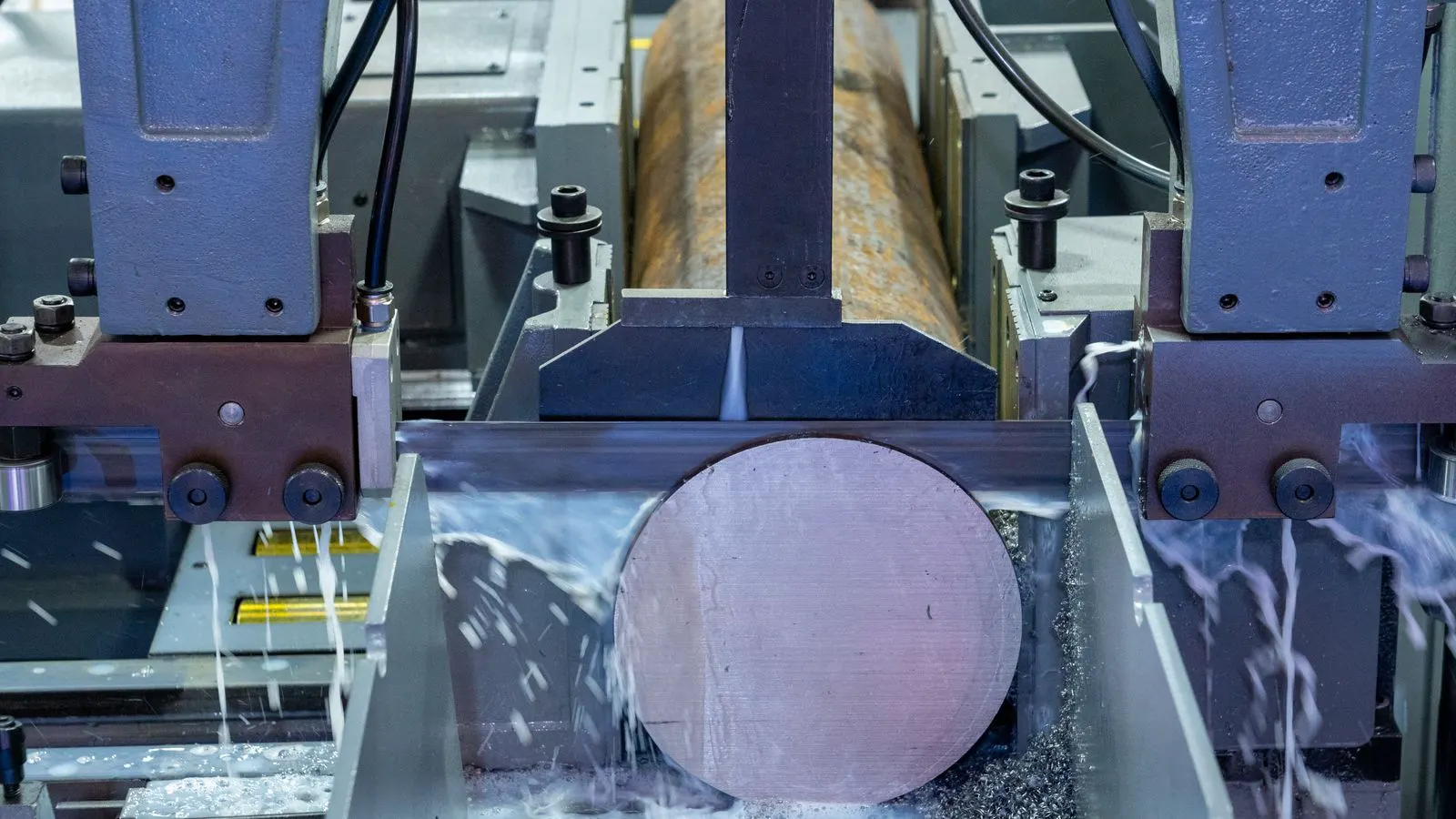
ABS grade bearings offer lower cost but wider tolerances and less consistent performance. Premium grades use tighter tolerances, higher purity steel, and stricter quality controls to deliver longer life and higher reliability in demanding applications.
- ABS grade bearings are cost-effective for low-load, non-critical applications.
- Premium grade bearings offer tighter tolerances and higher material purity for demanding machines.
- Selection criteria must match load, speed, duty cycle, and failure consequences.
- Verify quality through supplier documentation and incoming inspection.
- Do not mix grades in a single assembly unless the design allows it.
What Defines a Bearing Grade?
A bearing grade is a classification of quality. It tells you what tolerances the bearing meets, what steel purity level is used, and how much inspection and process control the manufacturer applies. The grade is not just a label. It changes the part.
ABS grade bearings follow a minimum standard. They meet basic dimensional tolerances and material requirements, but there is more variation from part to part. Premium grade bearings sit at the upper end of quality. They use tighter dimensional tolerances, higher purity steel, and often additional inspection steps.
The difference matters when the bearing is in a motor, gearbox, or machine where downtime is expensive. It matters less when the bearing sits in a light-duty fixture where failure has no cost.
How ABS Grade and Premium Grades Differ
The gap between the two grades shows up in a few specific areas.
Material purity is the first. Premium bearings use steel with lower impurity levels. This means less chance of hidden inclusions that start a fatigue crack. ABS grade bearings may still pass material tests, but the margin is smaller.
Dimensional tolerances are the second. ABS grade bearings have more tolerance in race geometry, ball size, and internal clearance. That tolerance is acceptable for light loads. It becomes a problem at high speed or in precision spindles. Premium bearings tighten those tolerances so the rolling contact is more even.
Surface finish is the third. Premium bearings typically have a finer surface finish on the raceways and rolling elements. Smoother surfaces reduce friction and micro-pitting under load.
Inspection and traceability form the fourth. Premium suppliers usually maintain tighter batch traceability. You can trace a bearing back to a heat number and a specific production lot. ABS grade suppliers may still do this, but the depth of records can vary.
Comparison of Bearing Grade Options
| Option | Best for | Limitations |
|---|---|---|
| ABS grade | Light-duty fixtures, low-load applications, cost-sensitive projects | Wider tolerances, less consistent life, higher risk in critical machines |
| Premium standard grade | General industrial duty, moderate speed, standard loads | Higher cost than ABS, still not enough for extreme precision or extreme speed |
| Precision grade | Spindles, machine tools, high-speed motors | Highest cost, overkill for low-load applications |
| Specialized grade | Extreme temperature, corrosion, or ultra-high-speed applications | Limited availability, specialized installation and lubrication requirements |
The table simplifies a complex set of choices. In practice, the grade you pick depends on the application, not just the price.
When to Choose ABS Grade
ABS grade bearings are a sensible choice when the cost is a real constraint and the failure consequence is low. If the bearing sits in a conveyor idler, a small pump, or a light-duty machine where replacement is cheap and downtime is short, ABS grade is often fine.
The key is to match the grade to the duty. Do not put an ABS grade bearing in a motor that runs at 3000 rpm with a heavy load. The wider tolerances and lower material purity will show up as shorter life and higher vibration.
Another common use is in prototypes. When you are testing a design and the bearing is not the critical part, ABS grade keeps the cost low while you validate the concept.
When to Choose Premium Grade
Premium grade bearings make sense when the machine has a high cost of downtime. A CNC spindle, a turbine, a press, or a high-speed motor can all justify the higher cost. The longer life and more consistent performance reduce the number of failures.
Premium grade also helps when the application has high speed. At high speed, even small tolerance variations cause more heat and vibration. A premium bearing with tighter tolerances runs cooler and more smoothly.
There is also a quality consistency benefit. Premium bearings tend to have more uniform performance across a production run. If you are building a fleet of machines, that consistency makes maintenance planning easier.
Selection Criteria That Matter More Than the Grade Label
The grade is one input, not the only one. Engineers and buyers often skip the other criteria and then wonder why the bearing failed.
Load and speed are the first. A bearing that handles a light load at low speed can be ABS grade. The same bearing in a high-load, high-speed application needs a higher grade.
Duty cycle is the second. A bearing that runs 24 hours a day has different life expectations than one that runs a few hours a week. A premium grade bearing may not be needed if the duty cycle is low.
Temperature is the third. Heat affects lubrication, clearance, and steel properties. A bearing in a hot environment may need a higher grade and a special lubricant.
Corrosion resistance is the fourth. A bearing in a wet or chemical environment may need a stainless steel or coated variant. The grade and the material are separate decisions.
Failure consequence is the fifth. If the bearing fails and the machine stops for a day, the cost may justify a premium grade. If the failure only stops a small tool for an hour, the cost may not.
How to Verify Quality Before Buying
The grade label on the packaging is not proof of quality. You need to verify it.
Ask for the material certificate. The steel should be traceable to a heat number. If the supplier cannot provide this, that is a red flag.
Check the dimensional tolerance report. Premium bearings should have a report that shows the actual measurements, not just that they pass.
Look at the surface finish specification. It should be stated in the data sheet. If it is missing, ask.
Review the supplier’s quality system. A supplier that maintains an ISO 9001 certification is a good starting point. The certification shows they have a process for quality control. It does not guarantee that every part is perfect, but it shows the system is there.
When you receive the bearings, do a sample check. Measure the inner and outer diameters. Check the internal clearance. Inspect the surface for damage. These checks take minutes and can catch a bad lot before it goes into production.
Common Mistakes in Grade Selection
The most common mistake is choosing the cheapest grade that fits the part number. The part number may be the same, but the quality level is different. Two bearings with the same size and type can have very different life if the grade is different.
Another mistake is mixing grades in one assembly. If one bearing is ABS and the other is premium, the weaker bearing will fail first. The failure can damage the other parts in the assembly.
A third mistake is ignoring the installation. A premium bearing installed with the wrong fit will underperform. The grade helps, but it does not replace correct installation.
A fourth mistake is assuming that a higher grade always means a better result. A precision grade bearing in a low-load application is a waste of money. The cost is real, and the benefit is not there.
Final Selection Advice
Start with the application. Write down the load, speed, duty cycle, temperature, and failure consequence. Then pick the grade that matches. Do not guess.
If the application is light and low speed, ABS grade is fine. If the application is moderate, a premium standard grade is often the right balance. If the application is high speed, high load, or high downtime cost, go to a higher grade.
Keep the documents. The material certificate, tolerance report, and supplier quality records are part of the product. They help you make a better decision next time.
They also help you defend a quality claim if the bearing fails early. Without the documents, the supplier can argue that the failure was from installation or misuse. With the documents, you can trace the problem back to the part.
A bearing grade is not just a price point. It is a quality decision. Make it deliberately.
Frequently asked questions
Can I use an ABS grade bearing in a high-speed motor?
Generally no. ABS grade bearings have wider tolerances that can cause heat and vibration at high speed. Use a premium or precision grade for high-speed motors.
What is the cost difference between ABS and premium grades?
The cost difference varies by size and supplier. Premium grades are more expensive. The exact difference depends on the part and the market conditions.
How can I tell if a bearing is actually premium grade?
Check the material certificate, tolerance report, and supplier quality records. A premium grade bearing should have documentation that shows the actual measurements and heat number.
Do ABS grade bearings meet safety standards?
They meet the minimum standard for their application. Whether that is safe depends on the application. A light-duty fixture is different from a safety-critical machine.
Should I mix ABS and premium bearings in the same machine?
No. The weaker bearing will fail first and can damage the other parts. Use the same grade throughout the assembly unless the design specifically allows different grades.