Ball bearings handle lighter radial and axial loads efficiently, while roller bearings support heavier radial loads with higher contact area. Engineers must match bearing type to load profile, speed, and duty cycle to ensure reliable machine performance.
- Roller bearings generally handle higher radial loads than ball bearings due to larger contact area.
- Ball bearings offer better speed capability and lower friction, making them suitable for high-speed applications.
- Contact geometry dictates how load is distributed and how fatigue life is calculated for each bearing type.
- Selection depends on specific load direction, speed limits, and environmental conditions within the machine.
- Incorrect bearing choice leads to premature failure, unplanned downtime, or reduced equipment life.
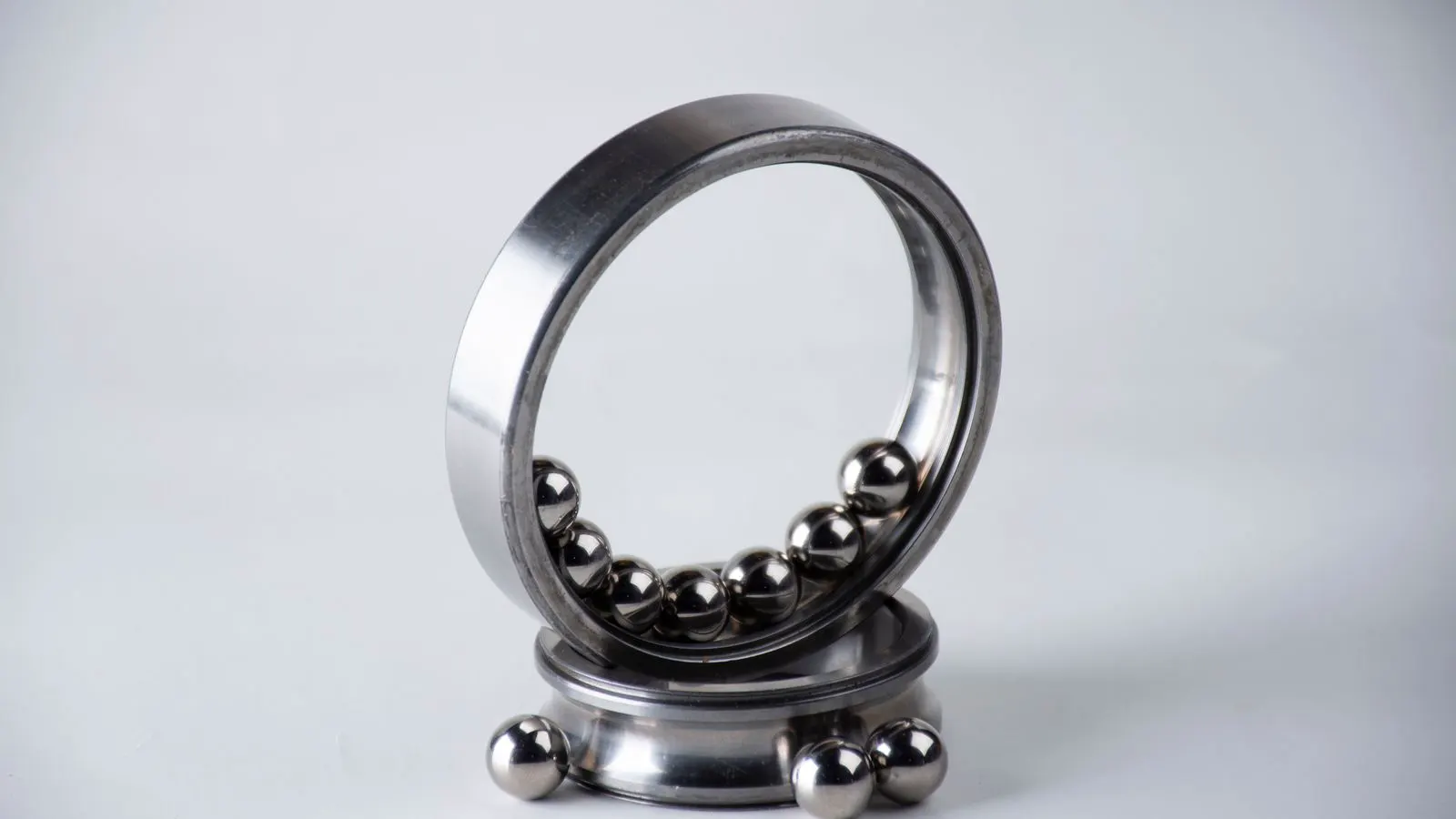
Choosing between ball and roller bearings for heavy industrial loads requires more than checking a catalog dimension. The difference lies in contact mechanics. Ball bearings use spherical rolling elements. Roller bearings use cylindrical, tapered, or spherical rollers. This geometry change alters how force is transmitted through the bearing. It changes contact stress, fatigue limits, and speed capability. Engineers must weigh these factors against the specific duty cycle of the machine.
How Contact Geometry Affects Load Capacity
The fundamental difference between ball and roller bearing design is the shape of the rolling element and the raceway. A ball bearing uses a sphere that makes point contact with the raceway. A roller bearing uses a cylindrical or tapered element that creates line contact. Line contact increases the surface area over which load is distributed. This reduces contact stress for a given load magnitude.
For radial loads, roller bearings typically offer significantly higher capacity. Tapered roller bearings are designed to handle high radial loads and moderate axial loads. Spherical roller bearings provide even higher radial capacity and can accommodate shaft misalignment. Ball bearings, while capable, have lower contact area and thus lower load limits. Deep groove ball bearings handle both radial and axial loads, but their radial capacity is limited compared to roller types.
The contact area calculation influences the rated dynamic load. A roller bearing with a larger contact area can sustain a higher load before reaching the stress threshold that causes fatigue spalling. This makes roller bearings the default choice for crushing mills, conveyor drives, and heavy-duty pump housings where static and dynamic radial loads are significant.
Speed and Friction Trade-Offs
Higher load capacity in roller bearings comes with a speed penalty. The rolling element geometry creates more rolling resistance than spherical balls. This increases friction and heat generation. Ball bearings roll with less resistance and maintain higher dynamic equilibrium. They operate efficiently at higher speeds.
For applications where speed is critical, such as spindle motors or high-speed pumps, ball bearings are often preferred. The friction difference is small at low speeds but becomes significant as rotation rate increases. Roller bearings also have more complex internal geometry. Tapered rollers require careful angular positioning. This adds to friction and wear if alignment is off.
Engineers must balance load capacity against speed requirements. A machine that runs at moderate speed but carries heavy radial loads favors roller bearings. A machine that operates at high speed with moderate loads favors ball bearings. The speed limit is often defined by the minimum friction coefficient and the bearing material’s thermal tolerance. Exceeding these limits causes rapid temperature rise, grease degradation, and eventual seizure.
Axial Load Handling and Directional Stability
Load direction is a primary selection factor. Ball bearings handle axial loads well, but their capacity decreases as the load becomes purely axial. Deep groove ball bearings can handle moderate axial loads in both directions. Angular contact ball bearings are optimized for high axial loads in one direction.
Roller bearings vary in axial capability. Cylindrical roller bearings have limited axial load capacity unless designed with a flange or set in a housing that restricts axial movement. Tapered roller bearings handle axial loads in one direction per set. Spherical roller bearings handle axial loads in both directions but with reduced radial capacity compared to their pure radial rating.
For heavy industrial applications with combined radial and axial loads, tapered or spherical roller bearings are often the standard. They provide the structural stability needed to support shaft deflection and shock loading. Ball bearings are better suited for applications where load direction changes frequently or where axial thrust is moderate.
Durability and Maintenance Implications
Bearing life is measured in millions of revolutions and calculated based on load, speed, and lubrication. Roller bearings, with their higher load capacity, often show longer life under heavy radial conditions. The larger contact area reduces fatigue stress, extending the time to spalling. However, roller bearings are more sensitive to contamination. The line contact area creates deeper raceway grooves that can trap grit. This accelerates abrasive wear if lubrication is inadequate.
Ball bearings have shallower raceway grooves and are generally more tolerant of minor contamination. They are easier to clean and inspect. This makes them easier to maintain in environments where complete cleanliness is difficult. The grease inside a ball bearing circulates more uniformly due to the spherical contact points. Roller bearings may require specific grease viscosity to ensure the rollers are fully lubricated along the line contact.
Maintenance intervals depend on the bearing type. Roller bearings in heavy load applications may need more frequent grease replenishment or replacement due to higher heat generation. Ball bearings may last longer between grease changes in moderate load conditions. The total cost of ownership includes the bearing itself, installation, and maintenance. A slightly more expensive roller bearing that lasts longer under heavy load may be cheaper than a ball bearing that fails prematurely.
Application-Specific Selection Guide
The choice of bearing type must align with the machine’s operating profile. Below is a comparison of typical applications based on load and speed characteristics.
| Option | Best for | Limitations |
|---|---|---|
| Deep Groove Ball Bearing | Moderate radial and axial loads, general machinery, moderate speeds | Lower radial load capacity, limited axial thrust compared to roller types |
| Tapered Roller Bearing | High radial loads, moderate axial loads, heavy-duty drives, crushers | Requires precise angular installation, lower speed rating, sensitive to misalignment |
| Spherical Roller Bearing | Very high radial loads, shock loads, misalignment tolerance, mining equipment | High friction, limited speed, complex housing requirements |
| Cylindrical Roller Bearing | High radial loads, low axial loads, high-speed conveyor drives | Limited axial load capacity, requires axial location of shaft or bearing |
| Angular Contact Ball Bearing | High axial loads in one direction, high-speed spindles, combined loads | Limited axial capacity compared to roller types, speed dependent on contact angle |
Selecting the correct type requires analyzing the load vector. If the load is primarily radial and high, choose a roller bearing. If the load is a mix of radial and axial with high speed, a ball bearing may be more efficient. If the shaft is prone to deflection, a spherical roller bearing provides the necessary compliance. The housing design also plays a role. Tapered roller bearings require specific bore fits and housing clearances. Ball bearings fit into standard housing bores more easily.
Common Selection Mistakes and How to Avoid Them
Engineers often make errors when matching bearing type to load. One common mistake is using ball bearings for applications with heavy shock loads. The point contact in ball bearings creates high stress concentration. Shock loads cause rapid fatigue failure. Roller bearings distribute shock better due to their larger contact area.
Another error is ignoring speed limits. A heavy load machine that runs at high speed will generate excessive heat in a roller bearing. This leads to grease breakdown and metal-to-metal contact. Checking the dynamic load rating against the speed rating is a basic step. If the product of load and speed exceeds the bearing’s limit, the temperature will rise.
Misalignment is a third common issue. Tapered and spherical roller bearings have different tolerance for misalignment. Cylindrical roller bearings are rigid and require precise alignment. Ball bearings tolerate some misalignment but not much. If the shaft deflection is high, a spherical roller bearing is the correct choice. If the shaft is rigid and well-aligned, a cylindrical roller bearing is efficient.
Finally, ignoring lubrication compatibility causes failure. Roller bearings with line contact require lubrication that can penetrate the narrow gap between the roller and raceway. Thin oils or greases may not provide adequate film thickness. Ball bearings are more forgiving with standard greases. Always match the lubricant viscosity to the bearing type and operating temperature.
Final Selection Criteria
The decision between ball and roller bearing comes down to a few key factors. Load magnitude is the first. If the radial load exceeds the capacity of a ball bearing, a roller bearing is required. Speed is the second factor. High speed applications favor ball bearings due to lower friction. Load direction is the third. Axial loads require specific bearing types, such as tapered rollers or angular contact balls.
Misalignment tolerance is the fourth. Heavy machinery often has shaft deflection. Spherical roller bearings handle this well. Contamination level is the fifth. Dirty environments favor ball bearings due to shallower grooves and easier maintenance. Lubrication system design is the sixth. Roller bearings may need different grease or oil systems than ball bearings.
Do not select a bearing based on cost alone. A cheaper ball bearing that fails early costs more in downtime and repair. A more expensive roller bearing that matches the load profile will likely last longer. Use the load calculations and speed limits to guide the choice. If the application is standard, follow the manufacturer’s recommended bearing type. If the application is unusual, consult with a bearing engineer to verify the selection.
The goal is to match the bearing geometry to the machine’s physical demands. Roller bearings are built for heavy loads. Ball bearings are built for speed and efficiency. Understanding these differences prevents premature failure and ensures reliable operation. Engineers should review the load history and speed requirements before specifying a bearing. The correct choice is often obvious once the load vector and speed limit are clearly defined.
Frequently asked questions
Can ball bearings be used for heavy industrial loads?
Yes, but only if the load is within their rated capacity. For very heavy radial loads, roller bearings are generally preferred due to higher load limits.
What is the main advantage of roller bearings over ball bearings?
Roller bearings have a larger contact area, which allows them to support significantly higher radial loads before fatigue failure occurs.
Are ball bearings better for high-speed applications?
Yes. Ball bearings have lower friction and rolling resistance, allowing them to operate at higher speeds with less heat generation.
How does load direction affect bearing selection?
Axial loads require specific bearing types. Tapered roller bearings handle axial loads in one direction, while spherical roller bearings handle loads in both directions.
What should I check before selecting a bearing for a heavy machine?
Check the radial and axial load magnitudes, the operating speed, the shaft deflection, and the contamination level. Match these factors to the bearing's contact geometry.